
Marker Academy

JUSART / MARKER ACADEMY

Know your tools.
Find your own way.

Welcome to JusArt Marker Academy

Your creative journey starts here. Explore marker types, discover helpful techniques, and learn how to choose the right tools for every project.

Explore Marker Guides
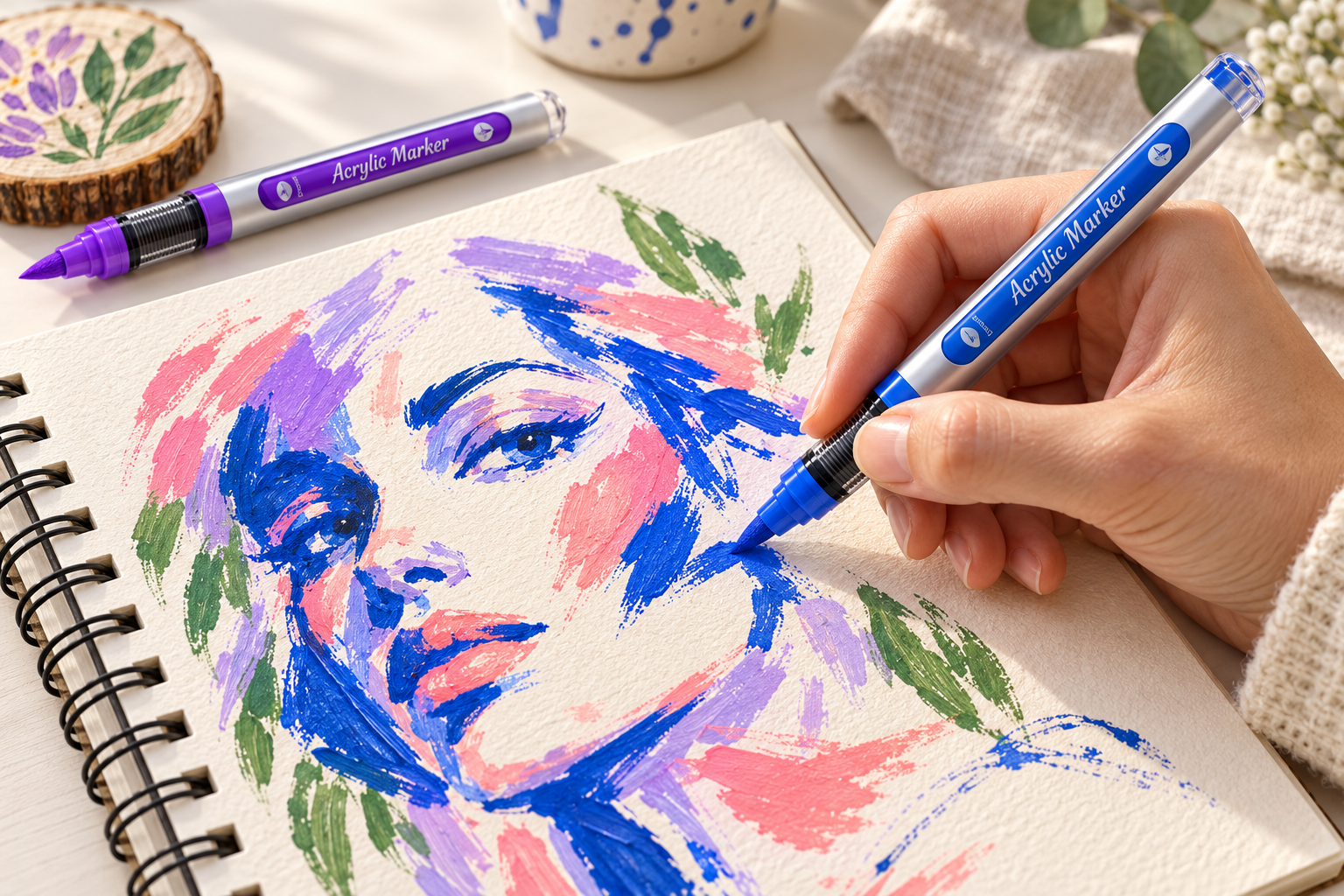
Colorful acrylic marker portrait illustration on a sketchbook

01 / YOUR STARTING POINT

Find Your
Perfect Markers

Not sure where to start? Answer a few simple questions to find the markers that match your creative needs.

Find My Markers
01
What will you create on?Paper, a craft surface or something new.
02
What result do you want?Opaque color, blended shades or small details.
03
Which marks feel right?Find a useful starting point, then compare the exact set.

02 / UNDERSTAND YOUR OPTIONS

Explore Marker Types

Ink, tip and surface work together. Start with the ink family, then check the exact set and tip. The images are illustrative style studies.

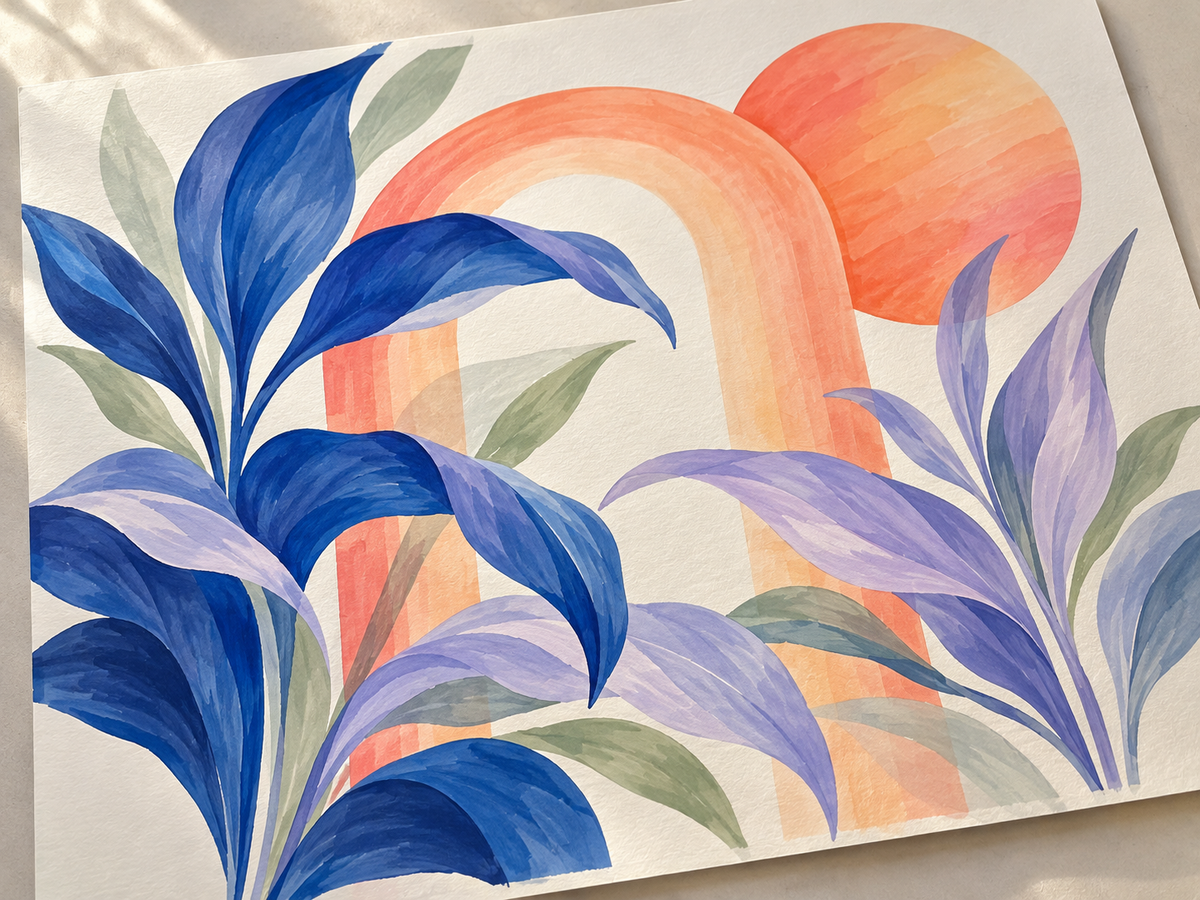
Illustrative botanical study with opaque cobalt, coral and sage painted layers

PAINT & LAYER

Acrylic paint markers

For opaque, painted marks and decorative projects.

How the ink behaves

The featured JusArt brush set uses water-based acrylic paint ink. This is different from a water-based coloring pen.

Best starting projects

Painted illustrations, lettering and decorative work on compatible surfaces.

Technique & what to check

Build a thin layer, let it dry, then add your next color or a small detail. Test adhesion and durability on the exact surface.

Before you buy: Suitable for a surface does not automatically mean permanent, washable, dishwasher-safe or food-safe.
Explore JusArt markers
Illustrative botanical study with translucent blue and coral color transitions

BLEND & ILLUSTRATE

Alcohol markers

For layered color and blended paper illustration.

How the ink behaves

Alcohol-based coloring ink can build translucent layers. The paper influences how the color spreads and blends.

Best starting projects

Illustration, gradients and color studies on suitable marker paper.

Technique & what to check

Start with two nearby colors. Work in a small area, test light-to-dark layers and protect the sheet underneath.

Before you buy: Bleed-through can happen even on thicker paper. Brush and chisel specifications shown for the 72-color set may differ from other options.

Explore JusArt markers
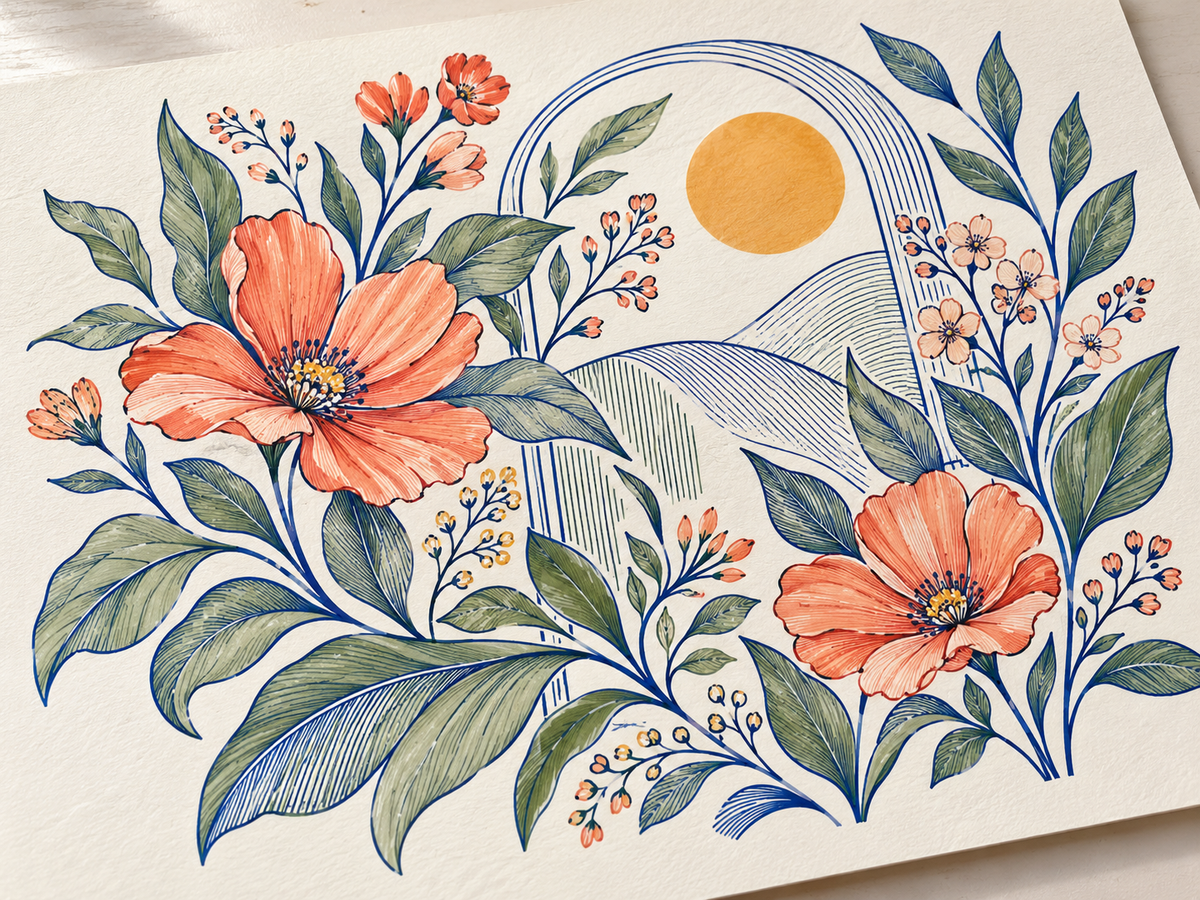
Illustrative botanical study with fine blue outlines and detailed coral flowers

COLOR & DETAIL

Water-based coloring pens

For coloring books, patterns and everyday journaling.

How the ink behaves

The featured 100-color JusArt set uses water-based coloring ink with fine and brush tips, rather than opaque acrylic paint.

Best starting projects

Paper coloring, fine details, drawing and journal decoration.

Technique & what to check

Use the fine tip for outlines, then the brush for fills. Test a small area before going over the same spot repeatedly.

Before you buy: Water-based does not mean no bleed-through. Heavy layering can damage some papers; do not assume every coloring pen is water-soluble.

Explore JusArt coloring pens

BEYOND THE THREE FAMILIES

Specialty formats

Jumbo, metallic, white and other specialist formats describe a size, finish or purpose; they are not one single ink family. Check the ink base, tip width, opacity and surface instructions for the exact product. A wide tip helps with larger marks, while a fine tip gives more control over small details.

03 / A LITTLE PRACTICE GOES A LONG WAY

Learn Marker Techniques

From your first strokes to blending, layering and creative effects, build your skills one small project at a time.

01

Your first five marks

A quick warm-up to understand your tip before starting a full drawing.

02

Build a two-color blend

Start with a small gradient rather than a complicated illustration.

03

Layer acrylic with intention

Separate coverage from detail so your colors stay clearer.

04

Find paper that works for you

Paper is part of the tool. A heavier sheet is not automatically a better marker sheet.

04 / QUICK ANSWERS

Before your
first mark.

A few small checks can make choosing and creating easier.

Are all water-based markers the same?

No. Water-based describes the liquid carrier, not the entire ink behavior. Acrylic paint ink and coloring ink serve different purposes. Check the exact product instead of choosing by the words water-based alone.

Which tip should a beginner choose?

Choose for the size of the marks you want to make. Fine tips help with small outlines, brush tips vary with pressure, and chisel or jumbo tips can cover wider areas. A dual-tip pen combines two tip shapes; it does not necessarily combine two ink types.

Can I use markers on shoes, glass or fabric?

Only when the exact marker and surface are compatible. Test adhesion and handling first and follow the product instructions. A concept drawing of a shoe is not proof that the pen works permanently on a real shoe. Do not assume washability, food contact or dishwasher safety.

Will thicker paper stop bleed-through?

Not necessarily. Paper coating, fiber and ink load matter as well as thickness. Test a line, a filled patch and an overlap, then inspect both sides. Use a protective sheet underneath.

How should I start a paint marker?

Follow the instructions for your exact pen. Some designs require shaking and priming; others use a different delivery system. Test the flow on scrap material and avoid pressing or pumping unnecessarily.

    Try this if it feels tricky